

About me
Real change, enduring change, happens one step at a time.
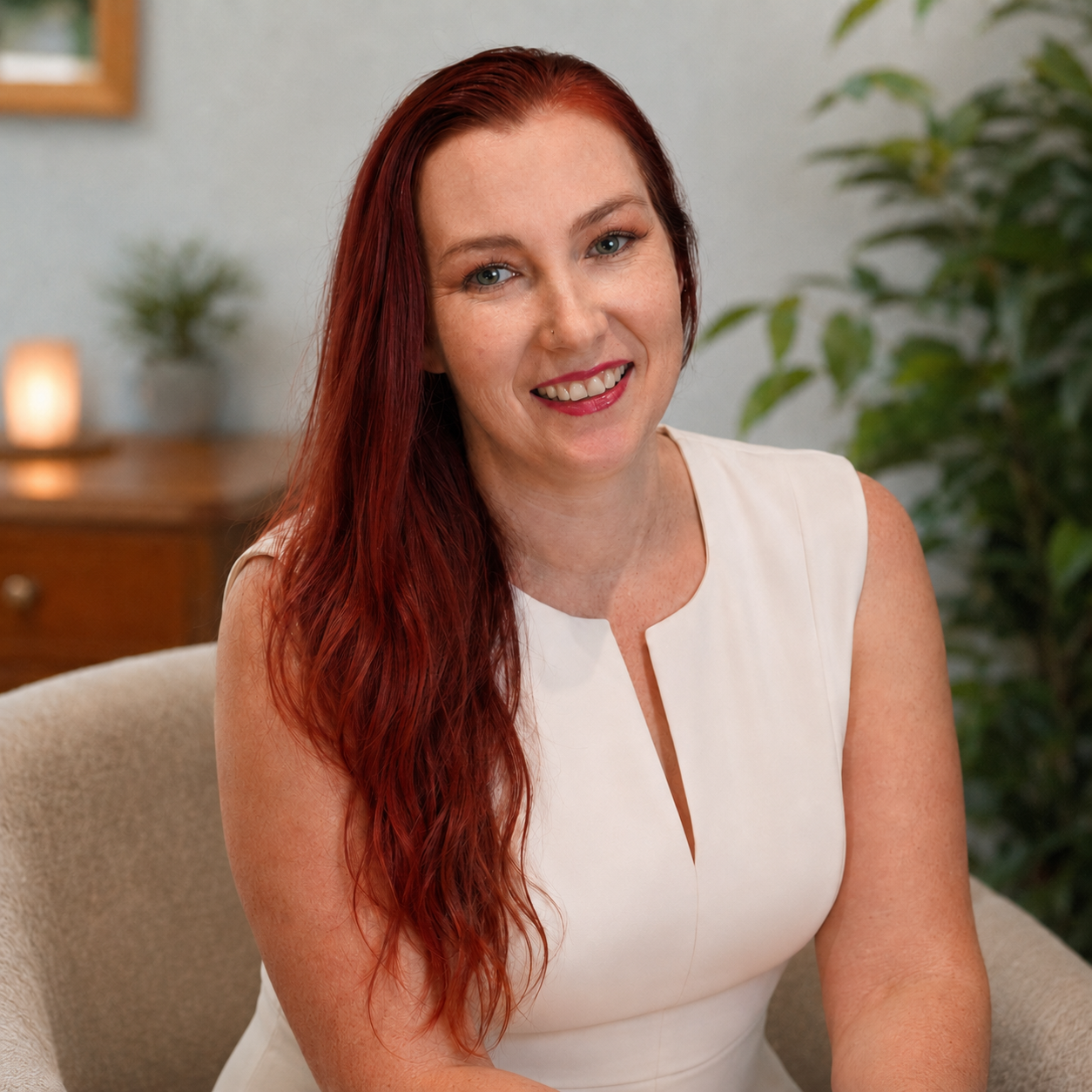
Kyla McDonald - Registered Psychologist
I work with adults experiencing complex or overlapping concerns involving mind and body. This includes chronic pain, stress-related physical symptoms, sexual and reproductive health, relationships, neurodivergence and emotional patterns that have been difficult to shift.
Many of my clients understand their difficulties well but are looking for practical support to turn that insight into meaningful change.
Approach
My work is grounded in a biopsychosocial understanding of how psychological, physical, behavioural and social factors interact. Together, we identify patterns across your thoughts, emotions, body responses, behaviours, relationships and life experiences.
Sessions are structured and collaborative, with a focus on practical change. I aim to provide clarity and direction while adapting the work to your needs, goals and preferred way of engaging in therapy.
I draw on evidence-based psychological therapies alongside body-based and somatic approaches. This can help you understand how stress, health conditions and past experiences influence both physical and emotional responses—and develop new ways of responding in everyday life.

Is my approach right for you?
My approach may suit you if you:
want therapy with structure, direction and practical strategies
want to move beyond just cognitive approaches
are interested in understanding patterns across different areas of your life (such as relationships, work, identity, life structure, sexuality)
have insight into your difficulties but feel unsure how to create change
value a collaborative approach with clear goals

Inclusive and affirming
I welcome people of all genders, sexualities, cultures, religions, relationship structures and neurotypes. This includes people in monogamous, polyamorous and other consensually non-monogamous relationships.
As a sexuality-diverse and neurodivergent person, I also bring relevant lived experience to my work. This informs—but does not replace—an individual understanding of each client’s experiences and needs.
Training
I have numerous qualifications that enable me to provide a comprehensive, holistic and evidence-based service to my clients.
Registered Psychologist (PSY0001634081)
Member of the Australian Association of Psychologists (AAPi)
Member of the Society of Australian Sexologists (SAS)
Member of the Australasian Society for Sexual Health Medicine (ASHM)
Master of Clinical Aromatherapy, Australian College of Aromatherapy (2026)
Certificate of Embodiment Counselling, Institute of Somatic Sexology (2021)
Graduate Certificate of Public Sector Management, QUT (2017)
Master of Organisational Psychology, University of Queensland (2011)
Diploma of Remedial Massage Therapy, College of Healing Therapies (2008)
Bachelor of Arts, Honours Psychology, University of Queensland (2007)
My therapeutic training includes Schema Therapy, Cognitive Behavioural Therapy, Acceptance and Commitment Therapy, Narrative Therapy, attachment-based approaches, embodiment counselling and somatic therapy.

A little about me
I established Body Sense Psychology in 2022 after more than 10 years working in government and private-sector psychology roles. My background includes counselling, organisational psychology, human factors, cultural change, workplace research and behavioural interventions. This experience also informs my work with clients experiencing workplace difficulties or attending under a WorkCover claim.
My perspective has also been shaped by a life that has not always followed a conventional path. I bring lived experience of neurodivergence, complex family relationships, domestic violence, caregiving, serious illness and loss, diverse relationships, parenting neurodivergent children, and supporting a child through an eating disorder. My earlier work across the corporate world, massage therapy and the adult industry has given me an unusually broad understanding of people, bodies, sexuality and the many different ways we build our lives.
As a psychologist, I’m warm, direct and focused on helping you make meaningful changes. You don’t need to arrive with clearly defined goals or the “right” words—they can emerge as we go. Very little shocks me, and you won’t be expected to censor yourself or make your experiences more socially acceptable. Therapy can involve talking, silence, humour, movement or working on the floor; it does not have to look like two people sitting formally in chairs.
Outside the therapy room, I’m endlessly curious and usually absorbed in a garden, home or art project—or planning the next one. I enjoy interesting ideas, clever films, beautiful food and slightly quirky places. I’m analytical and practical by nature, but equally creative, and I’m always looking for ways to make things work better.
Ultimately, I offer a space where you can be fully yourself, feel genuinely understood, and work towards changes that are meaningful in the context of your real life.