Nightmares: How to reduce distressing dreams
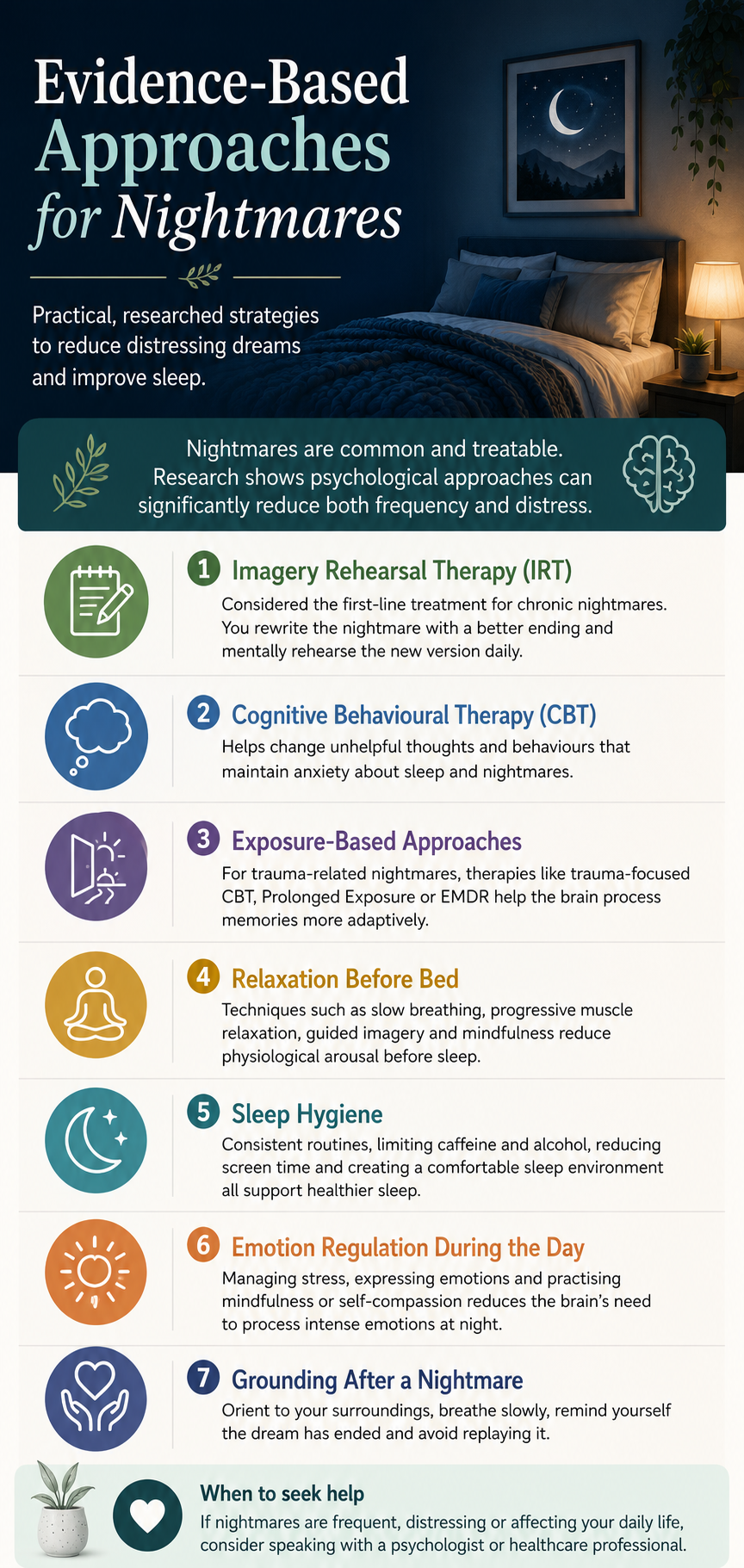
Nightmares are often dismissed as "just bad dreams," but for many people they are a significant source of distress. Frequent nightmares can lead to poor sleep, increased anxiety about going to bed, fatigue, and worsening mental health. For some, they are linked to trauma, while for others they occur without any obvious cause.
The good news is that several psychological treatments have strong research evidence supporting their effectiveness. Rather than trying to suppress dreams, these approaches aim to reduce their frequency, intensity, and emotional impact.
Why Do Nightmares Occur?
Nightmares are vivid, emotionally distressing dreams that typically occur during REM (Rapid Eye Movement) sleep and often cause awakening with clear recall of the dream.
They may occur because of:
Trauma or PTSD
Anxiety disorders
Depression
Significant life stress
Certain medications
Sleep deprivation
No identifiable cause (idiopathic nightmares)
Occasional nightmares are normal. Treatment is generally recommended when they become frequent, distressing, or interfere with sleep or daytime functioning.
Techniques That Help
Imagery Rehearsal Therapy (IRT)
Strongest evidence for chronic nightmares
Imagery Rehearsal Therapy is considered the first-line psychological treatment for recurrent nightmares. Rather than analysing what a dream "means," IRT helps change the brain's expectation of how the dream unfolds.
How it works
Write down the nightmare
Change the ending so it becomes safe, empowering, or even absurd. If you have difficulty coming up with something, try calling in ‘back-up’. Think of a close friend or family member who supports you and would respond in a way that would be helpful for the situation (e.g. if you are arguing with someone in the dream and can’t think of a way to respond, get a friend or family member to confront them - what would they say or do in the situation, or how would they help?)
Close your eyes and vividly rehearse the new version for 5-10 minutes.
Rehearse daily and monitor dream content for themes / improvements
Practice safe place visualisation after imagery rehearsal to enable sleep initiation (refer description below).
The aim is not to convince yourself the new dream is "true," but to repeatedly practise an alternative script so the brain becomes less likely to replay the original nightmare.
Research shows
IRT has been shown to:
Reduce nightmare frequency
Decrease nightmare distress
Improve sleep quality
Reduce PTSD symptoms in many individuals
Benefits often occur within several weeks of consistent practice.
Safe Place Visualisation
Safe place visualisation is a fantastic technique not only for relaxation and induction of deep sleep, but also for recovery from nightmares as well as during high stress or anxiety periods.
How to do it
Create a mental visual landscape where you feel at peace, calm, safe and protected
This can be any image you choose - garden, forest, field, museum, house, cave, space, etc.
It can be as simple or as complex as you like and can change over time.
Practice this visualisation before going to sleep for 5-10 minutes and whenever you wake from nightmares.
Cognitive Behavioural Therapy (CBT)
Helpful when nightmares are maintained by anxiety or worry
Many people begin fearing sleep because they expect another nightmare. This anxiety can increase arousal at bedtime, making nightmares more likely. CBT techniques that help are:
Identifying unhelpful beliefs e.g. “If I fall asleep, I’ll have another nightmare”
Breaking the avoidance cycle e.g. staying up late to delay falling asleep
Behavioural experiments e.g. go to bed at 10:30 for 1 week and record: whether a nightmare occurred, how intense it was and whether it was as bad as expected
Schedule a 15 minute ‘worry period’ earlier in the evening to write down fears and possible solutions
Reduce safety behaviours e.g. constantly checking the room after waking, leaving multiple lights on overnight, sleeping with the television running. The aim is to build confidence and the ability to tolerate distress.
Cognitive restructuring e.g. “I’m losing control” > “Nightmares are a common response to stress”
Distinguishing dreams from danger e.g. “My body reacted as though I was in danger, but I’m safe now”
Learning healthier ways of responding to nightmare-related anxiety often reduces both distress and frequency over time.
Exposure-Based Approaches
Especially useful following trauma
For trauma-related nightmares, avoiding memories often unintentionally keeps them emotionally powerful.
Trauma-focused therapies such as:
Trauma-focused CBT
Prolonged Exposure
EMDR
can reduce nightmare frequency by helping the brain process traumatic memories more adaptively. Importantly, treatment focuses on processing the trauma rather than the nightmare itself.
Relaxation Before Bed
Reduces physiological arousal
Nightmares are more common when the nervous system remains activated.
Evidence-based relaxation techniques include:
Progressive Muscle Relaxation
Slow diaphragmatic breathing
Guided imagery
Mindfulness meditation
These techniques do not directly "stop nightmares," but they reduce baseline arousal, making restorative sleep more likely.
Sleep Hygiene
Sleep habits alone rarely cure chronic nightmares, but poor sleep can make them worse. Helpful strategies include:
Consistent wake-up time
Limiting caffeine later in the day
Reducing alcohol before bed
Keeping the bedroom cool, dark and quiet
Limiting screens before sleep
Avoiding severe sleep deprivation
Regular sleep supports healthier REM sleep patterns. For more about sleep strategies, read my blog post here.
Emotion Regulation During the Day
Our dreams often reflect unresolved emotional processing. Developing skills to regulate emotions during waking hours can reduce emotional intensity during sleep.
Helpful approaches include:
Identifying emotions rather than suppressing them
Problem-solving ongoing stressors
Journaling
Self-compassion exercises
Acceptance and Commitment Therapy (ACT) strategies
Mindfulness
The goal is not to eliminate difficult emotions but to reduce the brain's need to repeatedly process them overnight.
Grounding After a Nightmare
What happens immediately after waking also matters. Instead of replaying the nightmare repeatedly, it can help to:
Orient yourself to your surroundings
Take several slow breaths
Notice five things you can see
Remind yourself the dream has ended
Avoid immediately searching for hidden meanings
This helps the nervous system return to safety more quickly.
What About Medication?
Medication is not usually the first treatment for nightmares.
For trauma-related nightmares, some medications have been studied, although the evidence is mixed and recommendations vary between clinical guidelines. Medication decisions should always be made in consultation with a medical practitioner, particularly when nightmares occur alongside PTSD or other mental health conditions.
When Should You Seek Help?
Consider seeking professional support if nightmares:
Occur weekly or more often
Cause significant distress
Lead you to avoid sleeping
Affect work, school or relationships
Occur following trauma
Are accompanied by panic, severe anxiety or depression
Nightmares are highly treatable, and many people experience meaningful improvement with evidence-based psychological interventions.
Final Thoughts
Nightmares are not simply something you have to "live with." Research shows that treatments such as Imagery Rehearsal Therapy, cognitive behavioural therapy, trauma-focused therapies, and relaxation techniques can substantially reduce both nightmare frequency and the distress they cause.
If nightmares are affecting your wellbeing, talking with a psychologist trained in evidence-based sleep and trauma interventions can help you regain confidence in sleep and improve your overall quality of life.