Why trauma shows up in the body: A gentle explanation
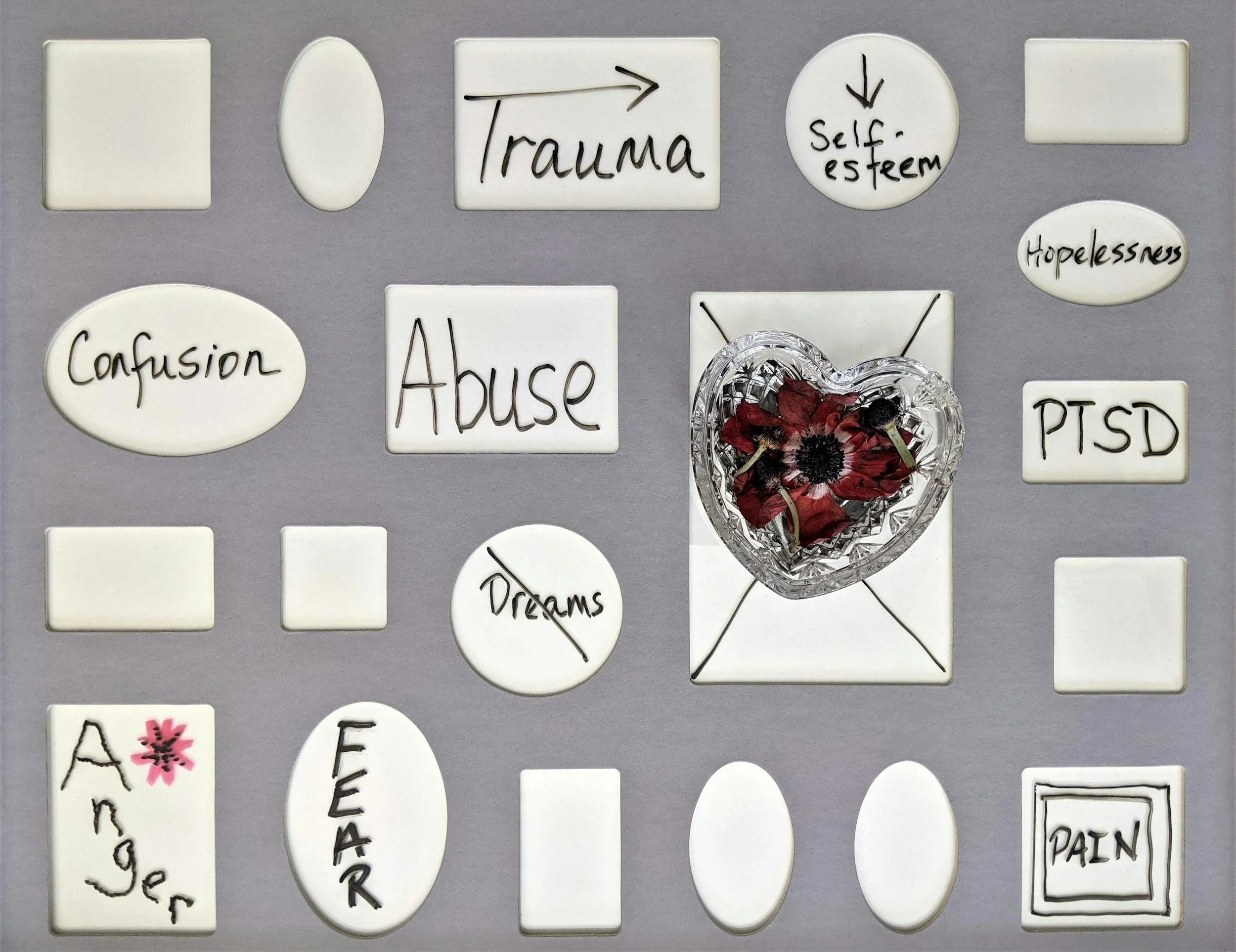
You’re not “overreacting.” You’re not “too sensitive.” Your body is doing exactly what it learned to do to keep you safe.
Trauma responses are not always obvious. Many people expect trauma to show up as distressing memories or strong emotions, but it can also appear through physical symptoms and patterns of behaviour.
Some common examples include:
Persistent muscle tension, particularly in the neck, shoulders, jaw or hips
Difficulty relaxing, even during periods of safety
A heightened startle response
Sleep difficulties or waking feeling exhausted
Digestive issues that worsen during times of stress
Feeling disconnected from the body or emotionally numb
Restlessness, agitation or difficulty sitting still
Chronic fatigue despite adequate rest
These responses are not signs that something is "wrong" with you. They may be signs that your nervous system has learned to stay alert in order to protect you.
When Your Body Remembers What Your Mind Has Forgotten
Not all memories are stored in the same way.
Some memories are explicit, meaning we can consciously recall them. Others are implicit, meaning they influence our thoughts, emotions, bodily sensations and behaviour without us being fully aware of why.
When something frightening, overwhelming or long-lasting happens, the body tends to store that experience as a pattern of protection. Even years later, certain sounds, smells or situations can activate the old survival response. This can help explain why someone may react strongly to a situation that seems relatively minor on the surface.
People often describe this experience as:
"I know I'm safe, but I don't feel safe."
"My reaction seems bigger than the situation."
"My body reacts before my mind catches up."
Understanding these patterns can help reduce shame and increase self-compassion.
This isn’t your fault — and it’s changeable
Your nervous system is adaptable. With the right support, your body can learn:
safety
grounding
connection
calm
emotional regulation
Therapy can help you understand your body’s signals and respond with compassion rather than fear.
What events might contribute to a trauma response?
I often talk to my clients about big trauma and little trauma (big T versus little T). It’s a useful way of framing the common experience many people with a trauma background have: it’s not the one big bang event, it’s a serious of little things over time that contribute to a larger pattern of repeated hurtful events. This can also be described as ‘micro-trauma’, and in my experience with clients, is a more common pattern than one big event being a primary contributor to a trauma response.
Trauma can result from many difference sources: absent or inconsistent parenting, abuse, sexual assault, occupational violence, bullying and harassment, domestic violence or strained family relationships. It can also come from specific events or contexts such as a car accident, injury, conflict, as well as military service. As I see a lot of clients with physical health conditions, medical gaslighting, misogyny and poor treatment is also a common cause that is often unacknowledged.
Why talking isn’t always enough
Understanding your experiences is an important part of healing, but insight alone does not always change how the body responds.
Traditional talking therapies are often recommended as a solution for those with a trauma history, which has merit in terms of working through what has happened and providing validation and acknowledgement of that. But for some people, understanding their experiences through conversation alone may not fully address the physical and emotional responses associated with trauma.
This is because it often does not acknowledge how trauma can live within the body, or that it often sits within a deeper part of the brain that often cannot be cognitively or consciously accessed (think the fight or flight parts of your brain that are trying to protect you from further harm). There’s often a gap between what we know intellectually and what we feel in our bodies.
This is one reason why many trauma-informed approaches include attention to physical sensations, emotional responses, and nervous system regulation. By learning to notice these patterns and respond to them differently, people can gradually develop a greater sense of safety, flexibility, and choice in situations that once felt overwhelming.
The goal is not to erase difficult experiences or force the body to forget them. Instead, it is to help the nervous system learn that the danger has passed, allowing old protective responses to become less necessary over time.
What treatment can look like
When I see clients with a trauma background, treatment often involves a range of approaches that may not include talking extensively about the events that contributed to trauma. Sometimes this is appropriate for acknowledgement and validation of what occurred but for others simply re-visiting prior events can be re-traumatising which can impact treatment outcomes.
Treatment could involve:
Learning to recognise nervous-system states.
Increasing body awareness.
Developing capacity to stay present with emotions.
Building a greater sense of safety.
Gradually reducing automatic protective responses.
Trauma-informed therapy can provide support that helps you reconnect with your body gently and safely.
Further Reading
Van der Kolk, B. (2014). The Body Keeps the Score.
Ogden, P., Minton, K., & Pain, C. (2006). Trauma and the Body.
Porges, S. W. (2022). Polyvagal Theory: A Science of Safety.
Yehuda, R., & Bierer, L. M. (2009). The relevance of epigenetics to PTSD.